Lookalike Face LoRA From Your Own Photos
Turn a phone photo dump you have consent to use into a face LoRA dataset: what to drop, the angle and light mix, captions, and when IP-Adapter is enough.
- Face LoRA
- Character LoRA
- Dataset prep
- Flux
- SDXL
Loading...
Practical, tested guidance on building character datasets that train well: how many images you need, how to caption them, how to stop identity drift, and how to pick between Flux and SDXL.
Written by the LoRA Dataset team. Subscribe via RSS.
Turn a phone photo dump you have consent to use into a face LoRA dataset: what to drop, the angle and light mix, captions, and when IP-Adapter is enough.
Which anime screenshots, official art and fan art belong in a Pony or Illustrious character LoRA dataset, and how to clean subtitles, letterboxing and blur.
How to keep one brand model consistent across a product catalog: when IP-Adapter is enough, what the LoRA dataset needs, and how to pair it with a product LoRA.
How to train a product line with several colorways or SKUs without color bleed: one LoRA per SKU vs multi-trigger sets, color captions and balanced repeats.
How to prepare video clips for a Wan 2.1 or 2.2 LoRA: clip length, 16 fps, 4N+1 frame buckets, trimming, motion captions and I2V vs T2V dataset rules.
How to train a product photo style LoRA that learns your catalog lighting, backdrop and color grade across many SKUs, and when to use a single-product LoRA.
A pre-training LoRA dataset checklist: delete blurry, compressed, watermarked and duplicate images, verify variety, and review captions before you train.
LoRA vs LoCon, LoHa, LoKr and DoRA compared: which layers each adapter trains, file size, tool support, and which one to pick for Flux, SDXL or SD1.5.
Load a trained LoRA in ComfyUI, Forge or Diffusers, pick a starting strength, use the trigger word, and stack character and style LoRAs cleanly.
Fix the LoRA training errors Flux and SDXL users hit most: CUDA out of memory, NaN loss, black samples, lora key not loaded and norm_final.weight warnings.
Can you train a LoRA on FLUX.1-schnell? How it differs from FLUX.1-dev, the training adapter you need, sample settings, and what each license allows.
A worked 20-image character LoRA dataset example: the exact shot list, framing mix, how to split a reference sheet, and sample captions for each image.
Start at 1e-4 for the UNet or Flux transformer (AdamW8bit). Text encoder: 5e-5 to 1e-5 on SD1.5/SDXL, or freeze it. How to spot a fried vs underbaked LoRA.
How to train two characters in one LoRA or in separate LoRAs, balance repeats and captions, and stop features bleeding when both appear in one image.
A practical Illustrious XL tag list: quality, aesthetic, rating and character tags, the right prompt order, negatives, and how they map to LoRA captions.
How many images a style LoRA needs, why subject diversity matters, and how to caption content without describing the style for Flux and SDXL.
In Kohya, total steps = images × repeats × epochs ÷ batch size. Use batch 1 or 2 for character LoRAs; AI-Toolkit counts steps, not epochs.
LoRA vs checkpoint explained: file size, VRAM, dataset size, stacking and when to train a LoRA, a full fine-tune, or an embedding for Flux and SDXL.
How to train Wan 2.1 and HunyuanVideo character LoRAs from still images: dataset size, captions, frame buckets, and musubi-tuner settings.
How Prodigy, AdamW8bit and Adafactor differ for LoRA training, which learning rate each expects, and when to pick each for Flux, SDXL and SD1.5.
Rank sets capacity and file size; alpha scales the update (alpha/rank). For character LoRAs, start at rank 16–32 with alpha equal to rank, or half.
What regularization (class) images do, how prior preservation works in Kohya, and when Flux and SDXL LoRAs actually benefit from them.
Use 20–40 shots of the same garment on different people, mask faces, plus a garment trigger. Flux vs SDXL settings so it learns the outfit, not the wearer.
For Flux and SDXL character LoRAs, start with JoyCaption Beta One. Florence-2 is fastest on low VRAM, Qwen2.5-VL follows prompts, Gemini is the easy API.
Do not crop LoRA images to a square. Keep 832x1216 and other native ratios and let Kohya or AI-Toolkit bucket them. Resolutions for SD1.5, SDXL and Flux.

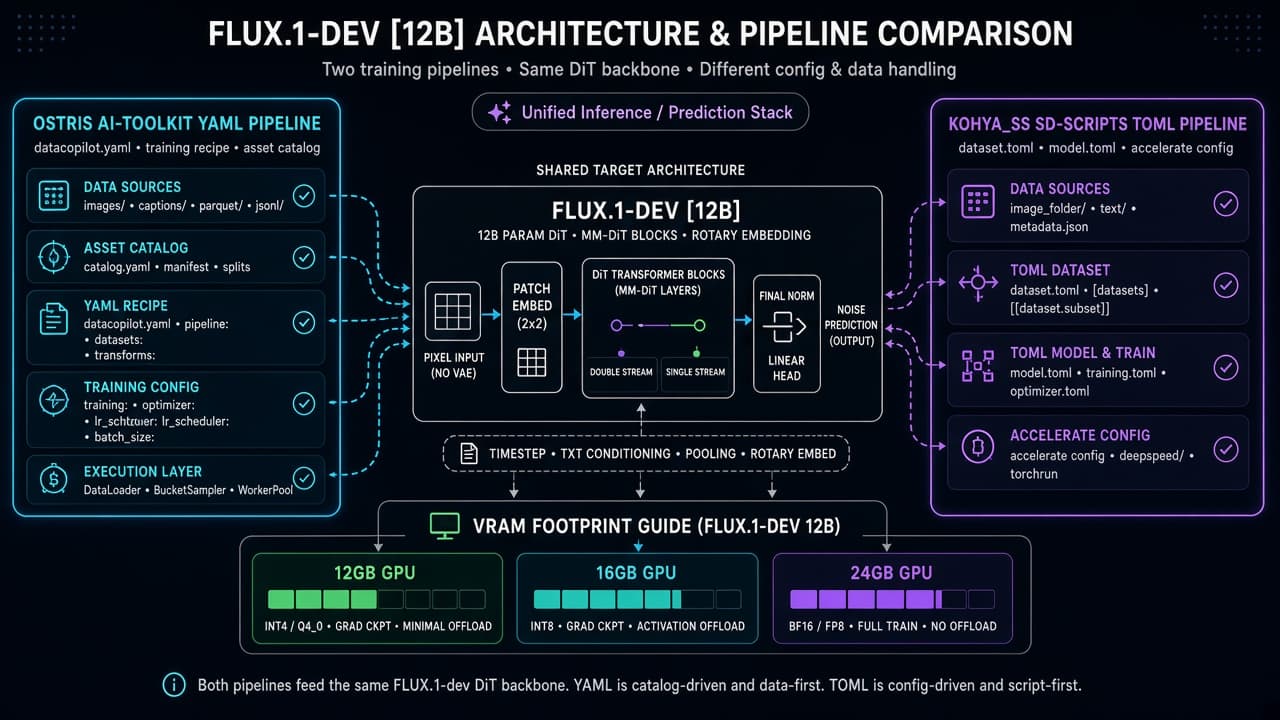
Ostris AI-Toolkit vs Kohya_ss sd-scripts for Flux.1-dev LoRA training: YAML vs TOML configs, 12GB/16GB/24GB VRAM settings, speed benchmarks, and when to pick.

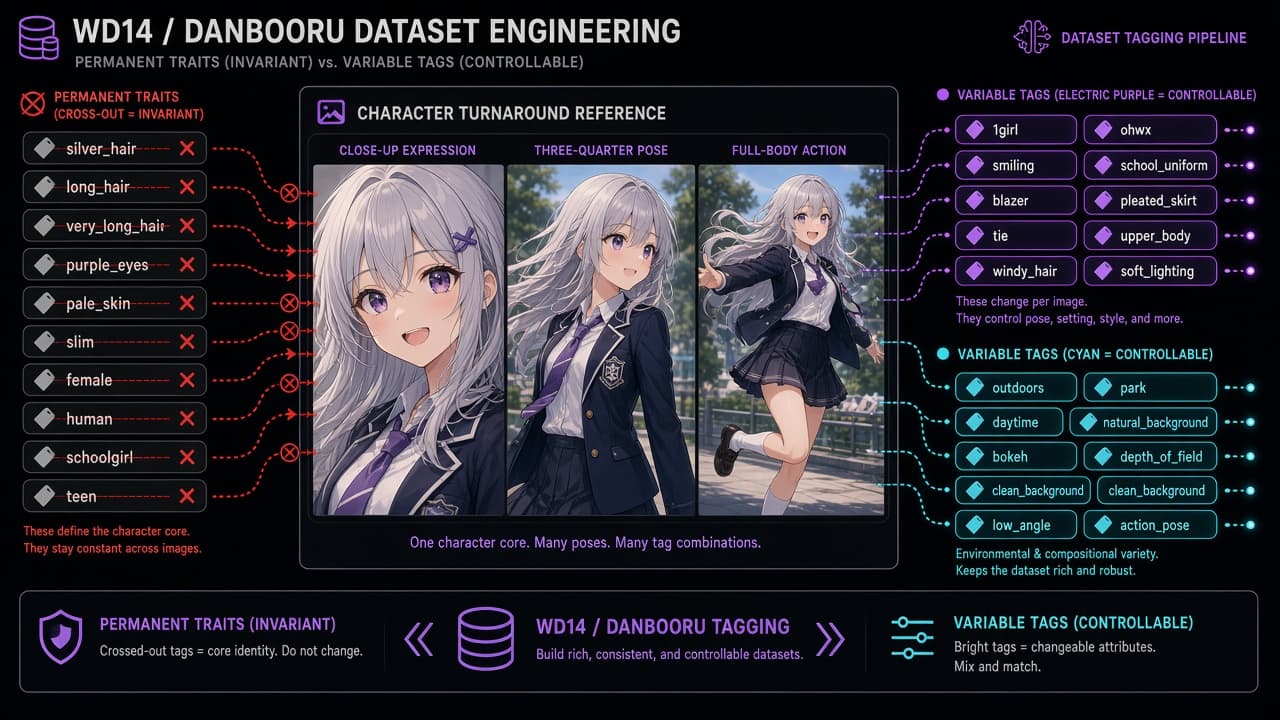
Caption anime LoRAs for Illustrious, Pony and NoobAI: trigger first, cleaned WD14/Danbooru tags, strip meta, and a score_ policy. What not to tag included.

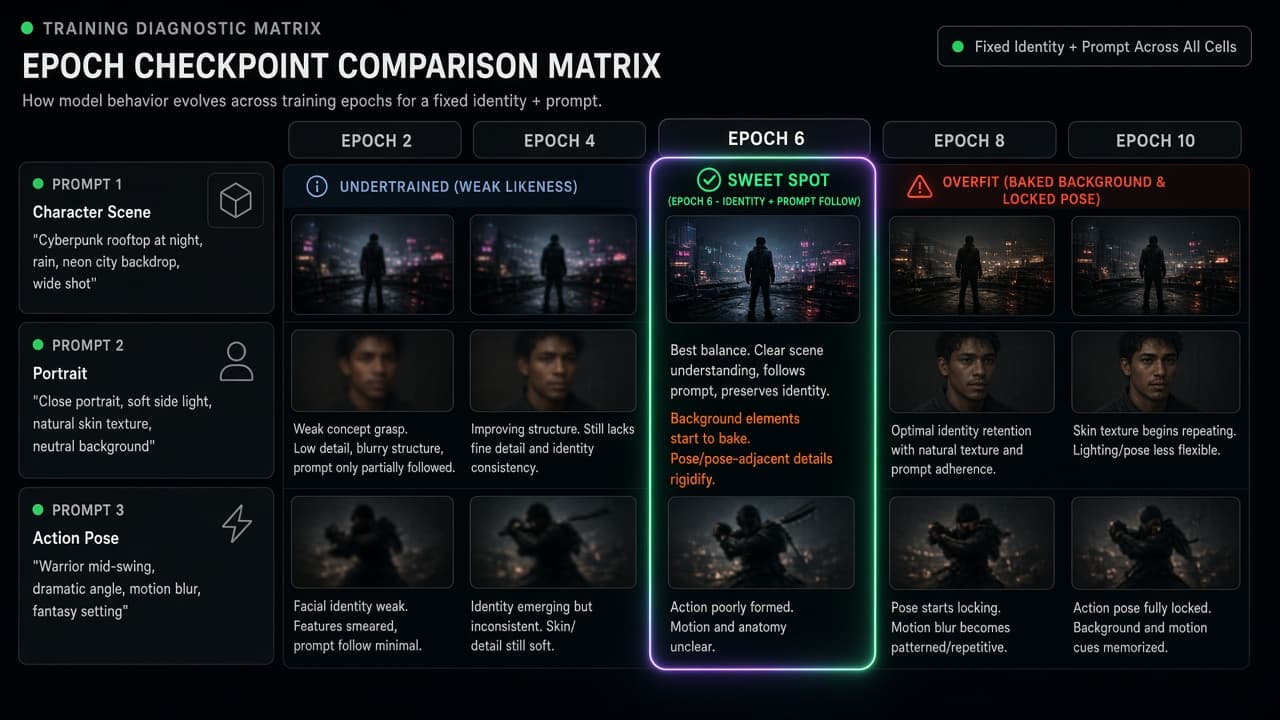
Spot overfitting (baked backgrounds, fried textures) vs undertraining (weak likeness) on a checkpoint grid, then change LR, rank or steps one at a time.

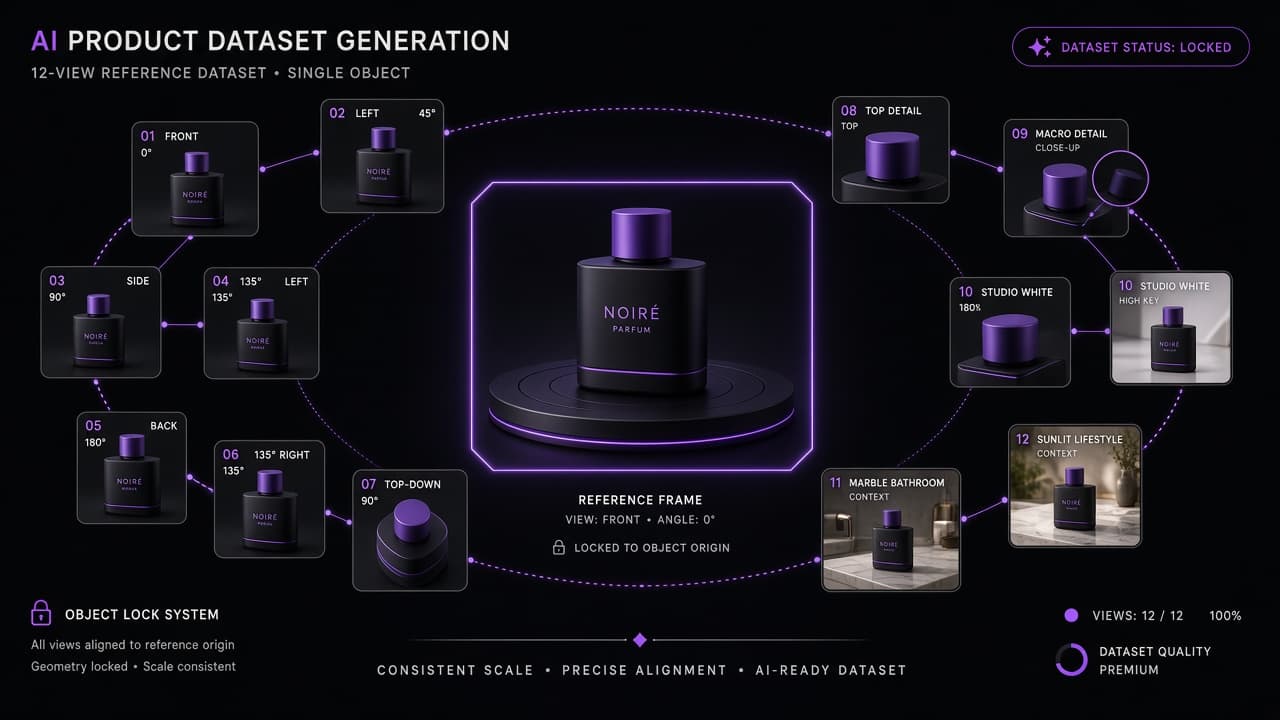
Train a product LoRA from one photo: ecommerce grids for bottles, footwear, labels, and furniture, plus Flux compositing for crisp packaging typography.

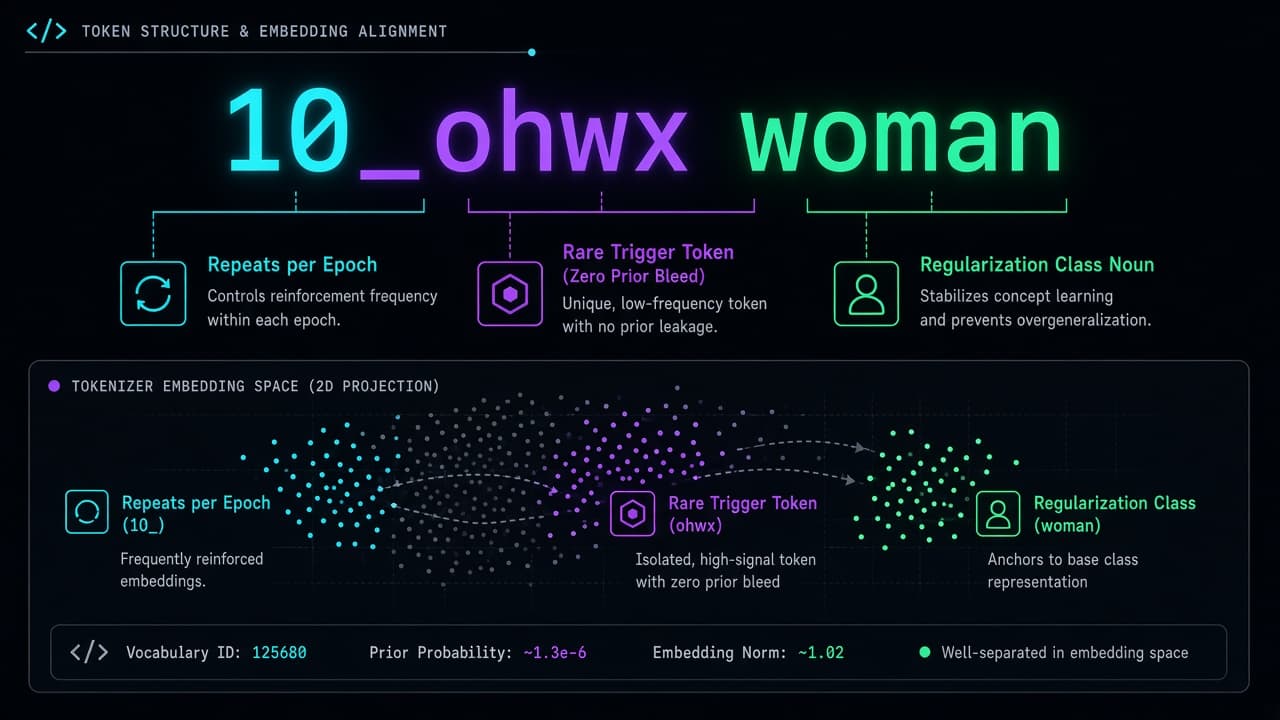
ohwx is a rare LoRA trigger, not a Kohya keyword. Compare ohwx, sks, snofs, zwx, and ukj, and learn how 10_ohwx woman splits into repeats and class tokens.

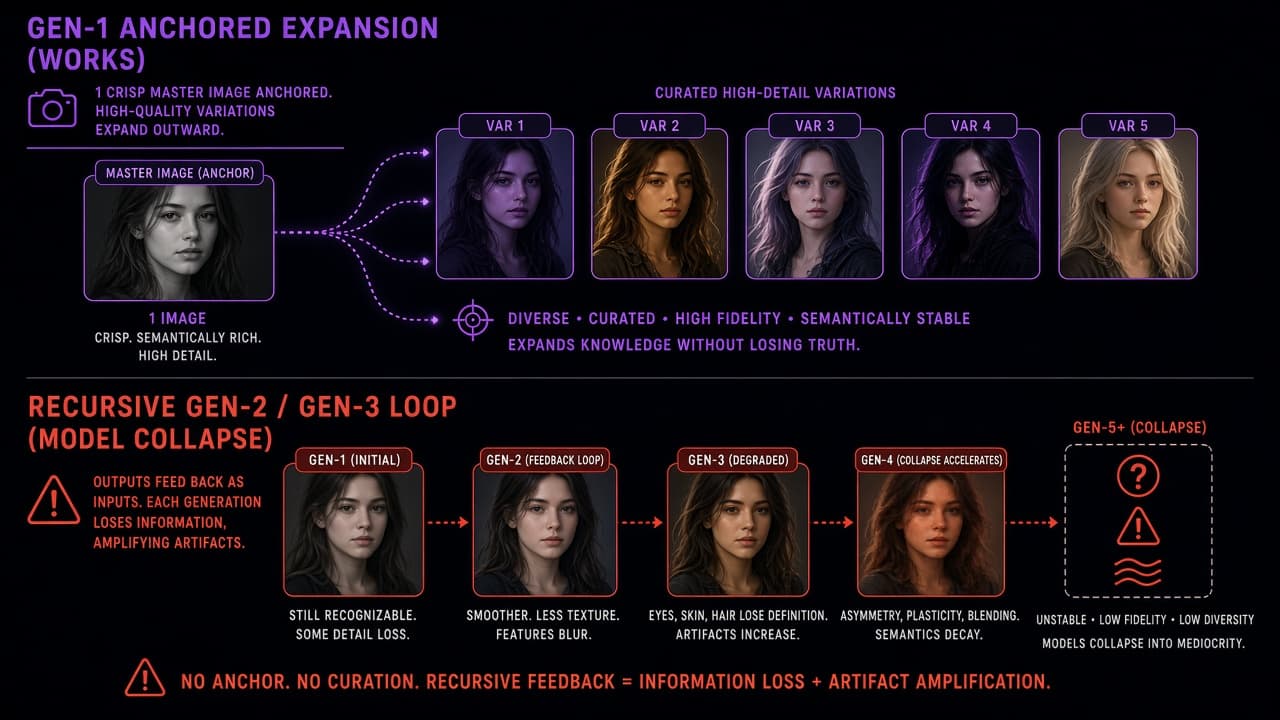
When AI-generated LoRA datasets help: anchor Gen-1 expansion vs recursive Gen-2/Gen-3 collapse, plus a curation checklist, hybrid ablation, and consent rules.

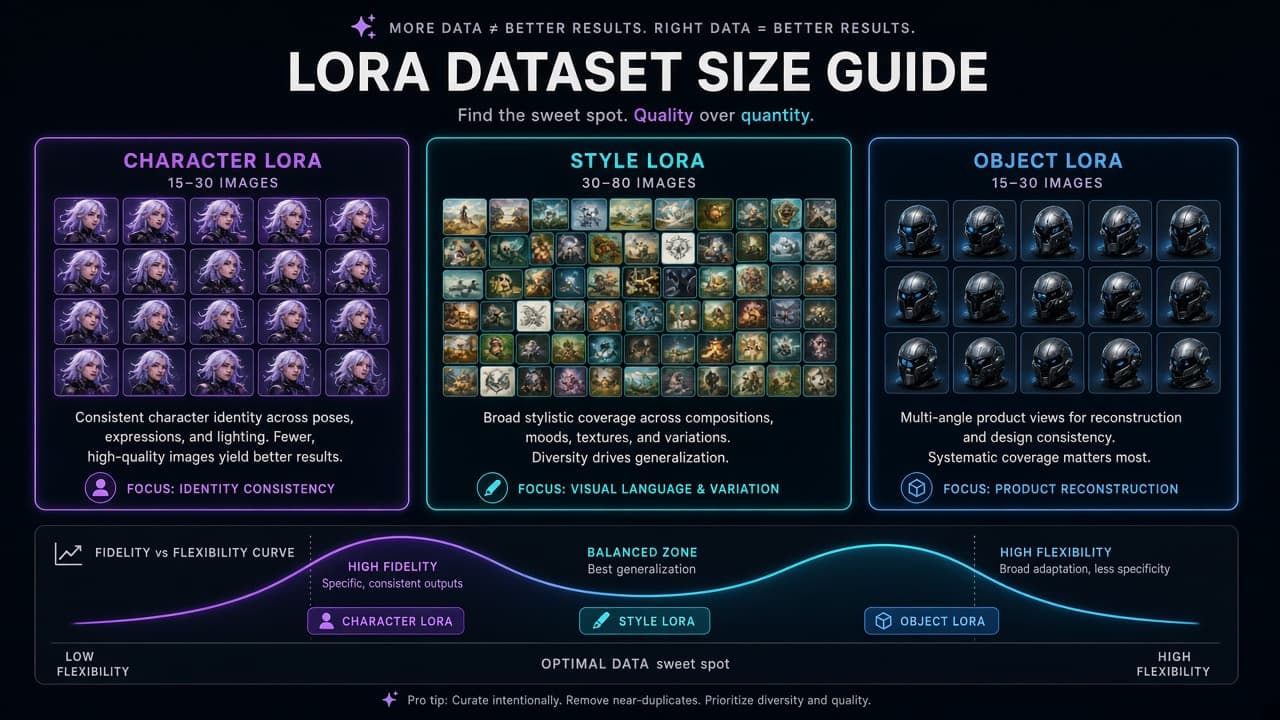
Most LoRAs train on 15–30 images: about 20 for a character or product, 30–50 for a style. Flux, SDXL and SD1.5 counts, and why quality beats quantity.

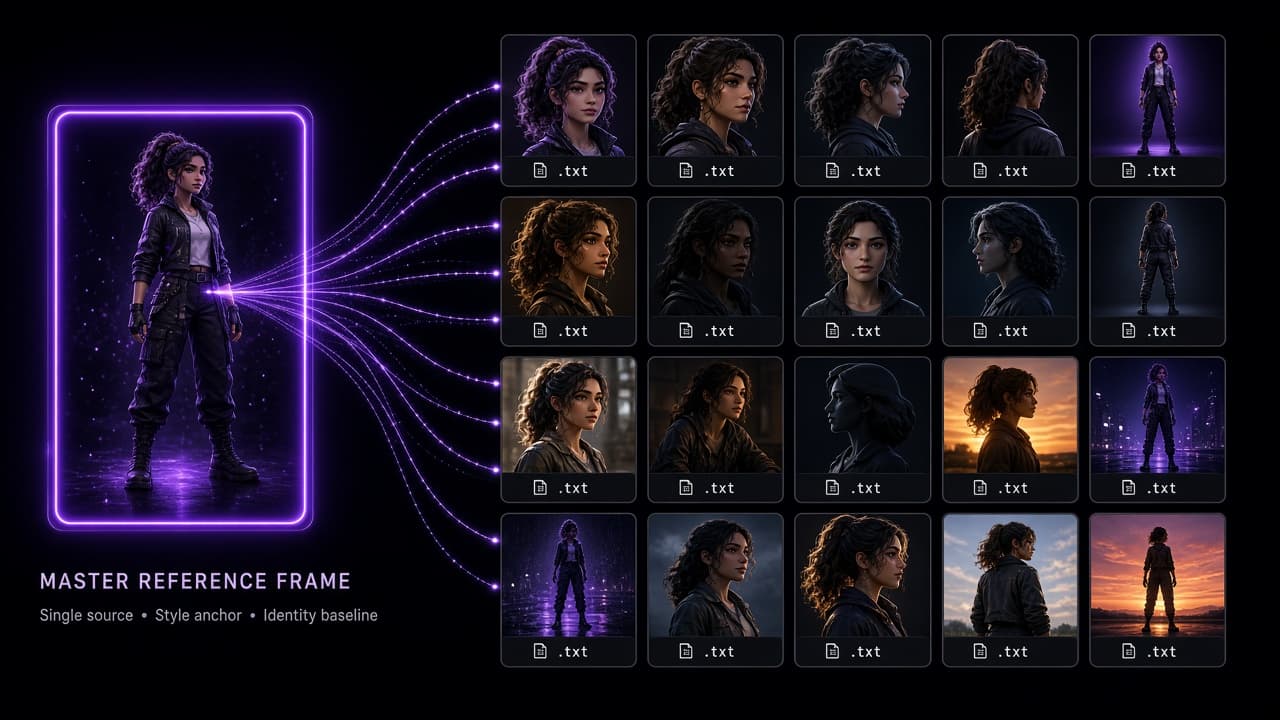
Turn one reference into a 20+ image captioned LoRA dataset: diversity grid, curation checklist, and how to load it in Civitai, Fal.ai, Replicate, Kohya.

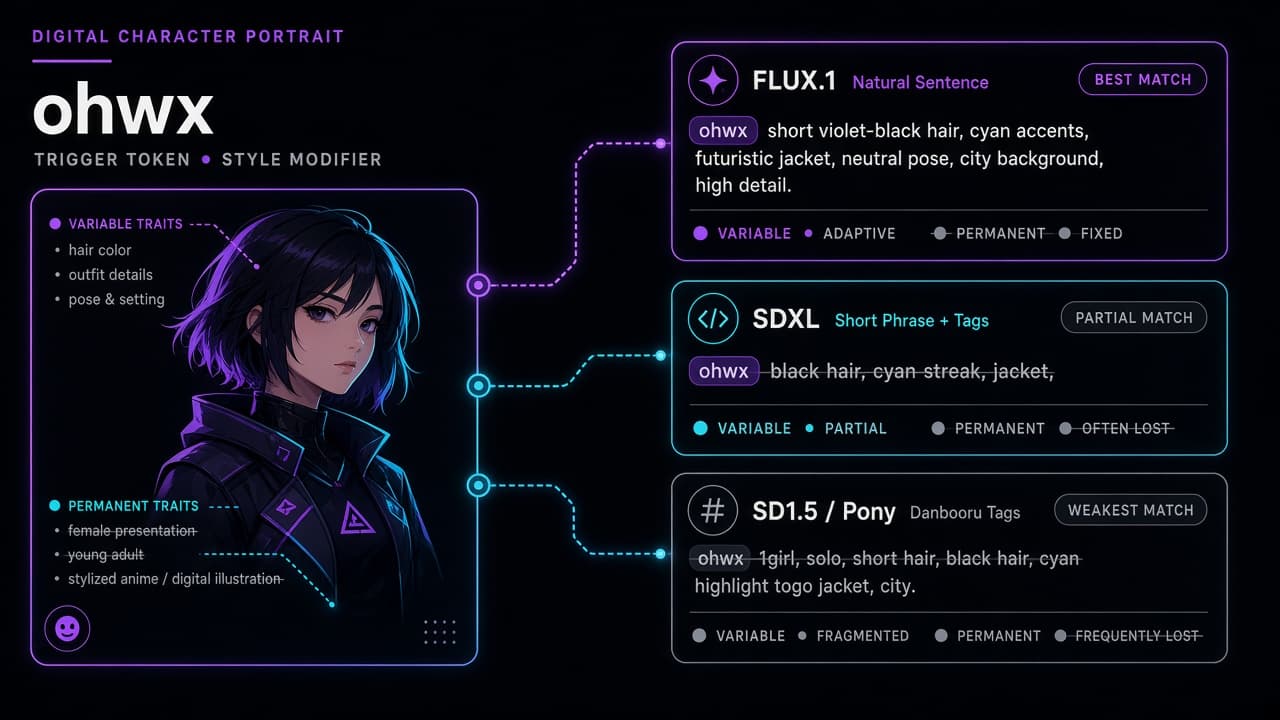
A LoRA trigger word is a rare token (ohwx, sks, or a custom name) that summons your character. How to pick and caption one for Flux, SDXL, Pony and SD1.5.

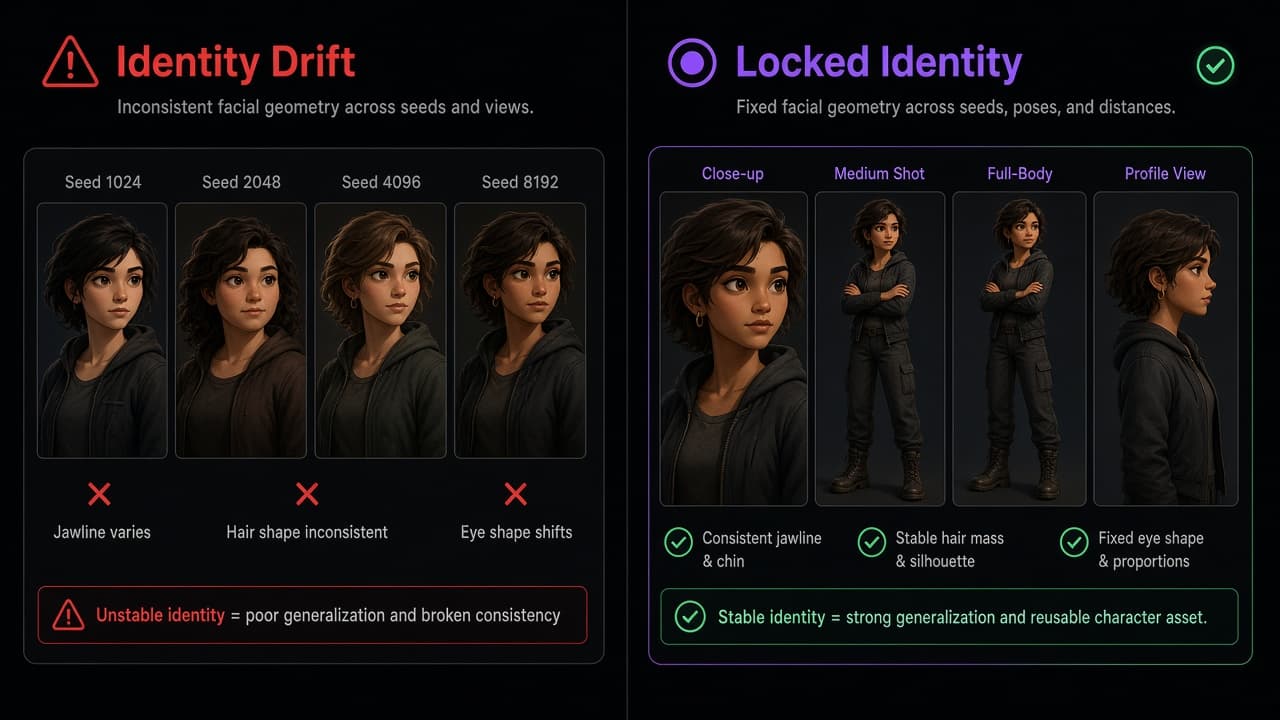
Character LoRA face changes every seed? Diagnose with a 4-framing grid, map symptom → cause → dataset/caption fix, then retrain.

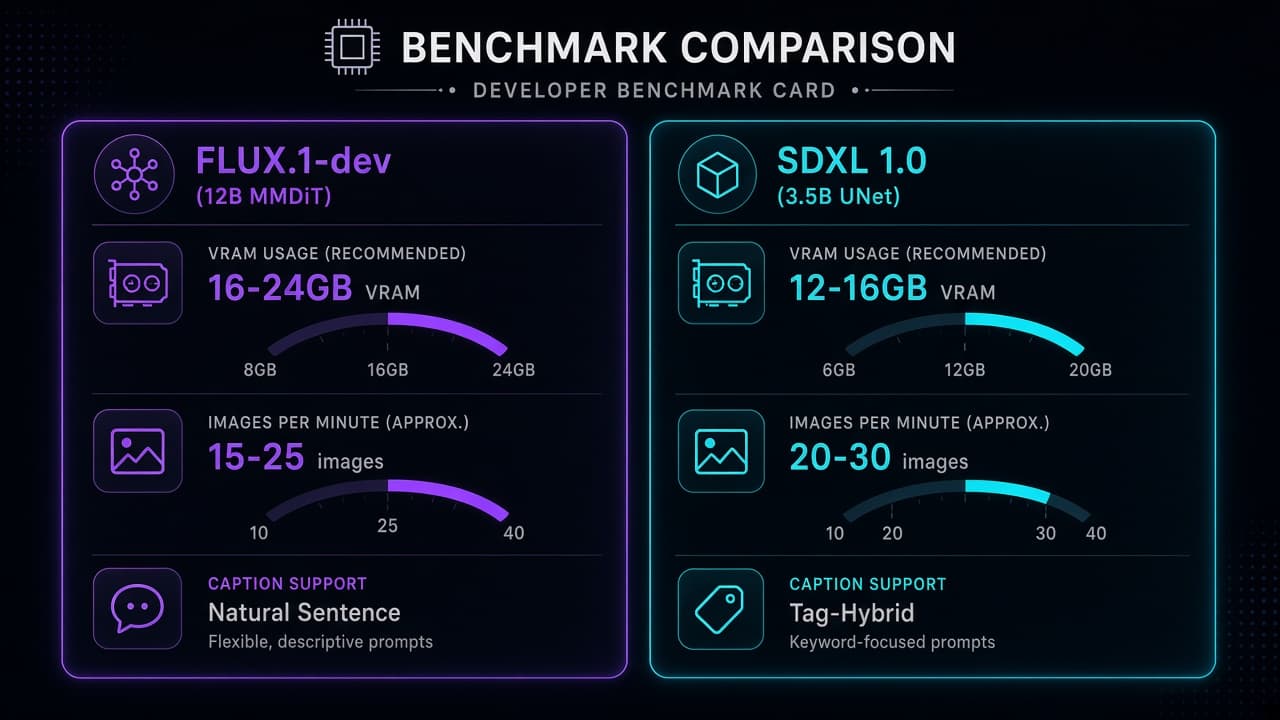
Flux.1-dev vs SDXL LoRA: VRAM floors, RunPod/Fal/Civitai/Replicate time and cost, dataset size, captions, licensing, and when each base wins.

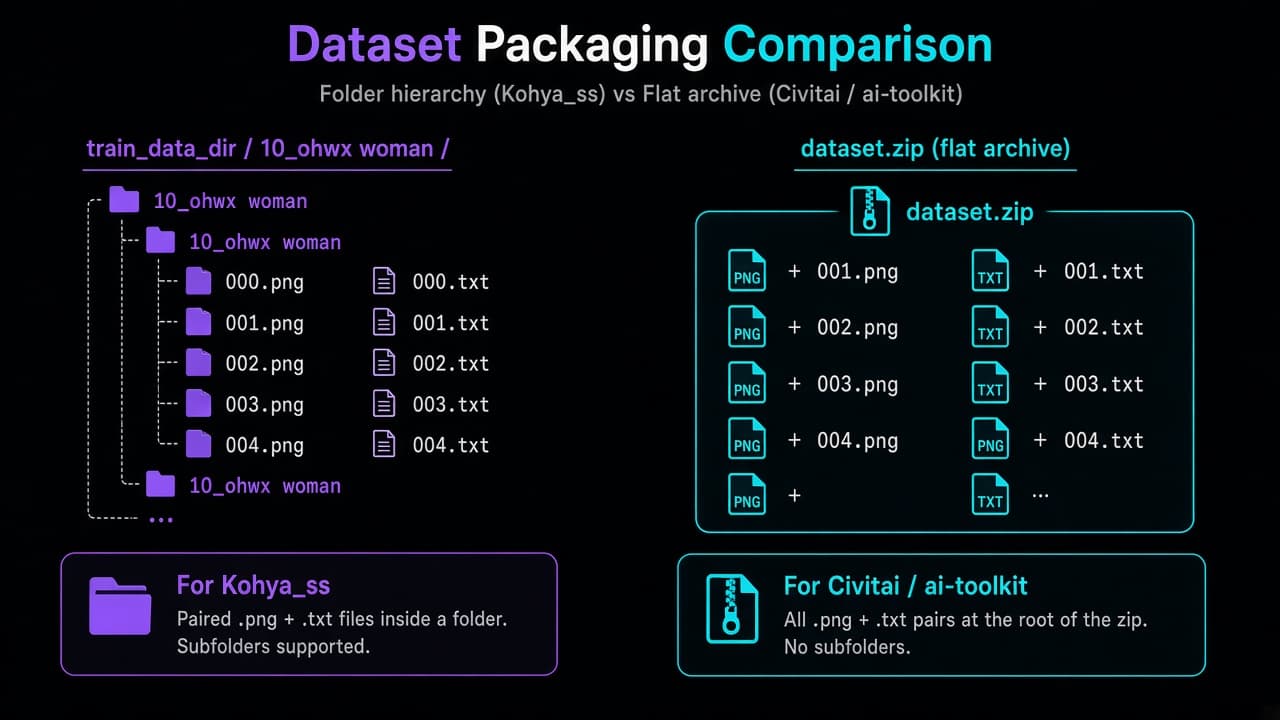
Pack image+.txt pairs for Kohya (10_ohwx woman under parent train_data_dir), Civitai flat zips, ai-toolkit, and OneTrainer—avoid No data found.
Upload one reference image and get 20+ identity-consistent, captioned images ready for Flux, SDXL, or SD1.5 training. Free with your own Gemini API key.
Create a dataset